5 Living Room and Dining Room Combo Ideas to Maximize Style and Functionality
A well-designed living room and dining room combo can make your home feel more spacious, organized, and inviting. Open-concept layouts have become increasingly popular because they create a seamless flow between different living areas while maximizing available square footage. Whether you live in a small apartment, a modern condo, or a spacious family home, combining these two essential spaces can enhance both comfort and practicality.
The key to a successful living room and dining room combo is creating a sense of unity while maintaining distinct zones for relaxing and dining. With thoughtful furniture placement, strategic décor choices, and smart design techniques, you can achieve a balanced and stylish look that works for your lifestyle.
In this article, we’ll explore five creative living room and dining room combo ideas that can help you transform your open space into a functional and beautiful area.
1. Define Spaces with Area Rugs
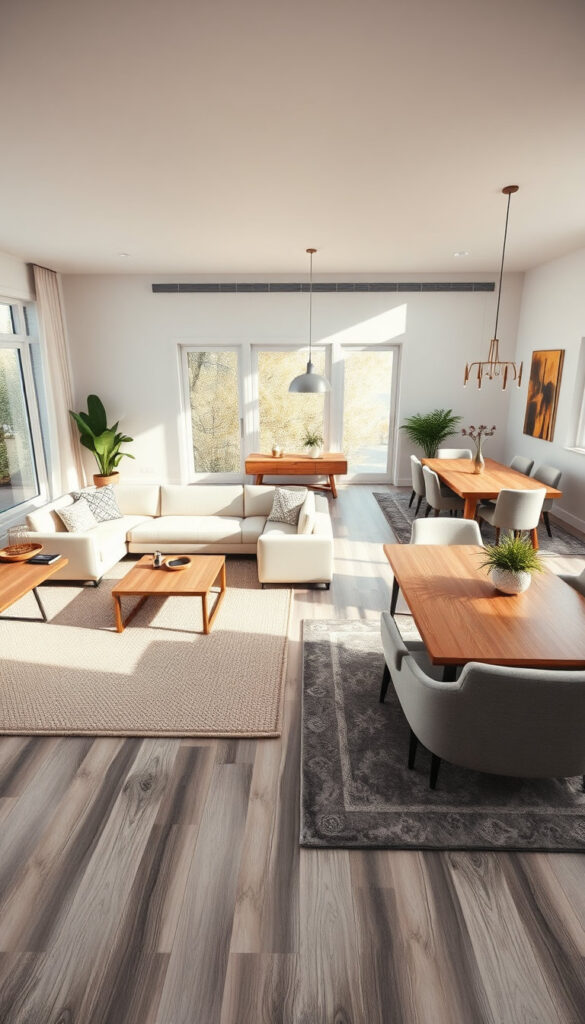
One of the simplest ways to distinguish your living room from your dining room is by using area rugs. Rugs act as visual boundaries, helping each zone feel intentional without disrupting the open layout.
Choose a soft, cozy rug for the living room that complements your seating arrangement. For the dining area, select a durable rug large enough to accommodate the table and chairs, even when the chairs are pulled out.
To maintain a cohesive look, use rugs that share similar colors, patterns, or textures. This approach helps create separate zones while preserving the overall harmony of the room.
Why It Works
- Clearly defines each functional area.
- Adds warmth and texture.
- Enhances the overall design aesthetic.
- Creates visual balance in open-concept spaces.
2. Use Furniture Placement as a Natural Divider
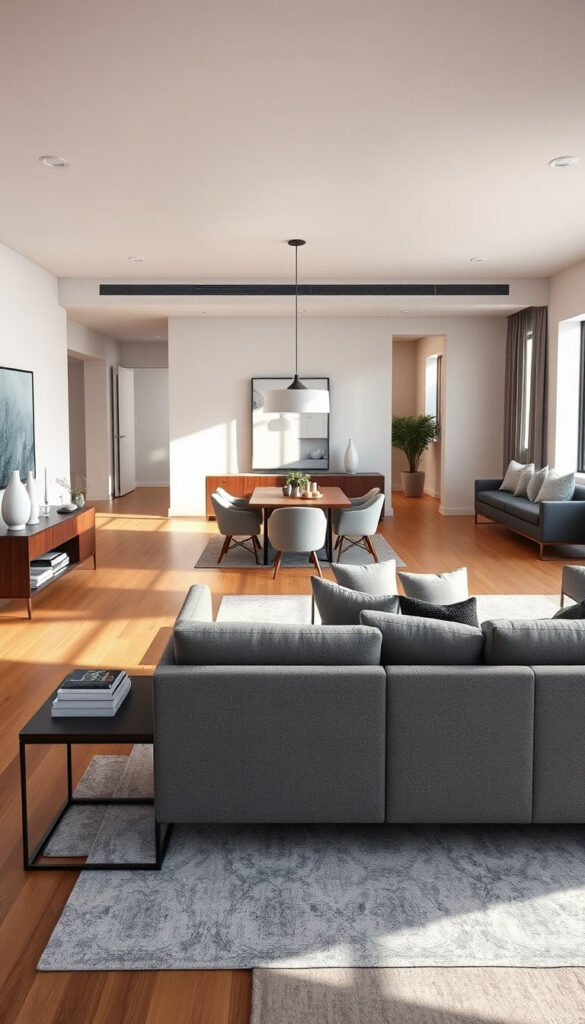
Furniture can serve as an effective room divider without the need for walls or partitions. A strategically placed sofa is one of the most popular solutions for separating a living room from a dining area.
Position the back of the sofa toward the dining space to establish a natural boundary. You can also use a console table behind the sofa to add storage, display decorative items, or provide additional functionality.
Bookcases, open shelving units, and sideboards can also help define spaces while maintaining an airy and open feel.
Design Tips
- Keep pathways clear for easy movement.
- Avoid oversized furniture that overwhelms the room.
- Maintain consistent spacing between zones.
- Choose furniture pieces that complement each other.
By using furniture strategically, you can create distinct areas without sacrificing openness.
3. Create Cohesion with a Unified Color Palette
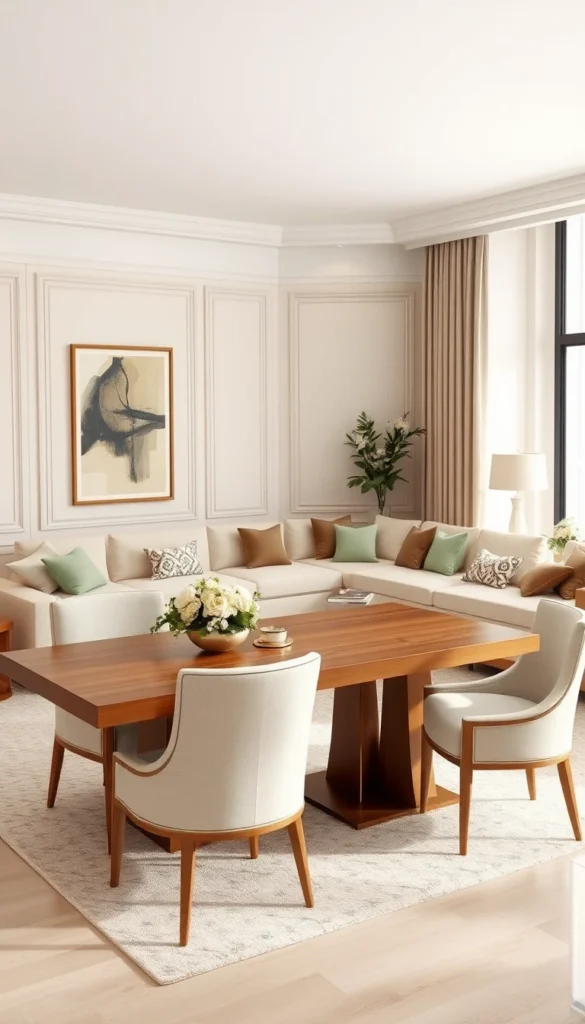
A consistent color scheme helps tie your living room and dining room together, making the combined space feel larger and more harmonious.
Start with a neutral base such as white, beige, gray, or soft taupe. Then introduce accent colors through pillows, artwork, dining chairs, curtains, and decorative accessories.
For example, if your living room features navy blue accent pillows, consider incorporating navy blue elements in the dining area through table décor or upholstered chairs.
Popular Color Combinations
- White and natural wood tones
- Gray and navy blue
- Beige and sage green
- Black and warm neutrals
- Cream and soft blush accents
Using a unified palette creates visual continuity and prevents the room from feeling disjointed.
4. Incorporate Statement Lighting for Each Zone
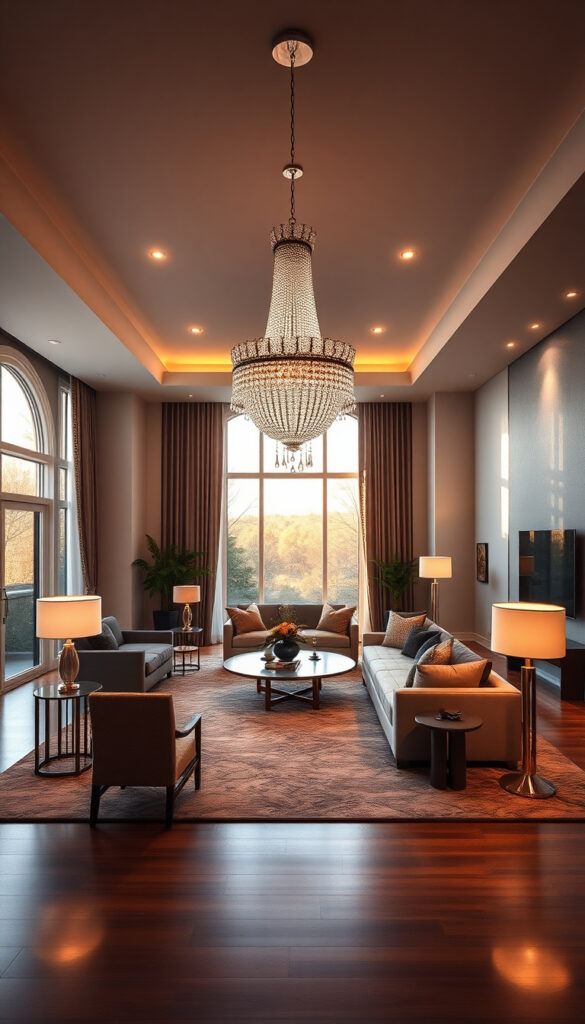
Lighting plays a crucial role in defining separate areas within an open-concept layout. Different lighting fixtures can help establish each zone while adding character and style.
A chandelier or pendant light centered above the dining table naturally highlights the dining area. In the living room, floor lamps, table lamps, or recessed lighting create a warm and comfortable atmosphere.
Even though the lighting fixtures may differ in design, they should share a common style or finish to maintain visual consistency.
Lighting Ideas
Dining Room:
- Modern chandeliers
- Linear pendant lights
- Industrial-style fixtures
- Elegant crystal lighting
Living Room:
- Floor lamps
- Table lamps
- Wall sconces
- Recessed ceiling lights
Layering different types of lighting ensures both areas are functional and inviting throughout the day.
5. Add Multifunctional Furniture for Maximum Efficiency
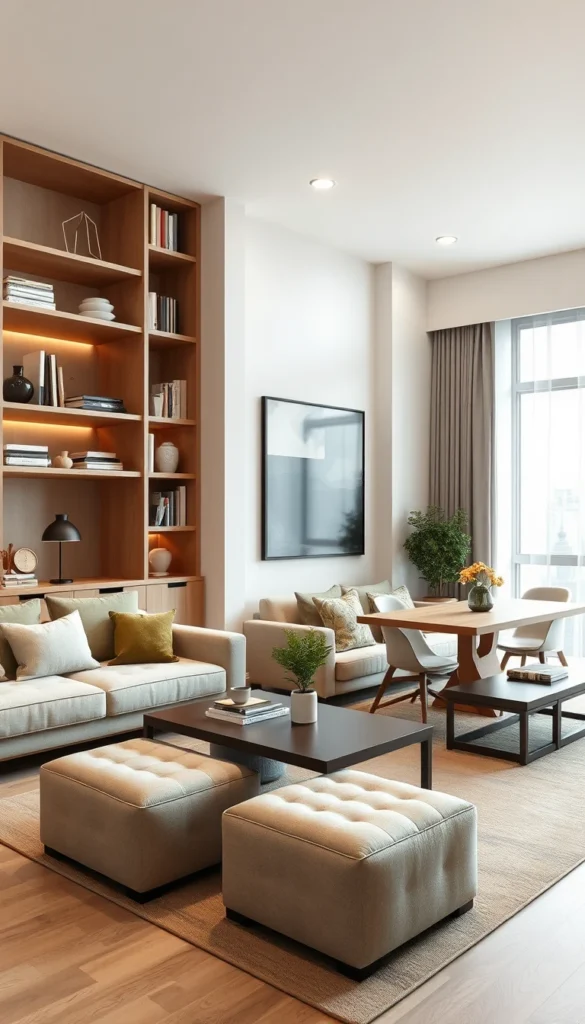
In smaller homes and apartments, multifunctional furniture can make a significant difference. Pieces that serve multiple purposes help maximize space without compromising style.
Consider a dining table with built-in storage, nesting coffee tables, or an ottoman that doubles as extra seating. Storage benches and sideboards can also provide valuable space for organizing dining essentials, books, and decorative accessories.
Multifunctional furniture allows you to make the most of every square foot while maintaining a clean and uncluttered appearance.
Space-Saving Furniture Ideas
- Extendable dining tables
- Storage ottomans
- Console tables with drawers
- Nesting side tables
- Built-in shelving units
These versatile pieces are particularly useful in compact living room and dining room combos.
How to Make a Small Living Room and Dining Room Combo Feel Bigger
If you’re working with limited square footage, there are several design strategies that can help your space feel more open and spacious.
Use Light Colors
Light-colored walls reflect natural light and make rooms appear larger. Whites, creams, soft grays, and pale beige shades work particularly well.
Choose Furniture with Exposed Legs
Furniture that sits slightly off the floor creates a sense of openness by allowing more visible floor space.
Utilize Mirrors
Mirrors reflect light and visually expand a room. Consider placing a large mirror opposite a window to maximize brightness.
Keep Décor Minimal
Avoid overcrowding the space with excessive furniture or accessories. Focus on a few statement pieces rather than numerous small decorations.
Maximize Natural Light
Use sheer curtains or light window treatments that allow sunlight to flow freely throughout the room.
Common Mistakes to Avoid
When designing a living room and dining room combo, it’s important to avoid common pitfalls that can make the space feel cluttered or unbalanced.
Ignoring Traffic Flow
Ensure there is enough space for people to move comfortably between the living and dining areas.
Using Too Many Styles
Mixing too many design styles can create visual confusion. Stick to a cohesive theme for the best results.
Choosing Oversized Furniture
Large furniture can overwhelm a shared space and make it feel cramped.
Neglecting Storage
Insufficient storage often leads to clutter. Incorporate functional furniture with hidden storage whenever possible.
Forgetting Scale and Proportion
Choose furniture and décor that fit the dimensions of your room to maintain balance and harmony.
Final Thoughts
Designing a living room and dining room combo requires a thoughtful balance between style and functionality. By defining zones with rugs, arranging furniture strategically, maintaining a cohesive color palette, incorporating layered lighting, and investing in multifunctional furniture, you can create a space that feels organized, welcoming, and visually appealing.
Whether you’re decorating a compact apartment or a spacious open-concept home, these five living room and dining room combo ideas can help you maximize your space while creating a comfortable environment for everyday living and entertaining. With careful planning and creative design choices, your combined living and dining area can become one of the most beautiful and functional spaces in your home.