5 Rugs in Living Room: Creative Styling Ideas for a Warm and Beautiful Space
Decorating a living room involves more than choosing the right sofa or coffee table. Rugs play a major role in defining the room’s character, comfort, and functionality. While many homeowners opt for a single area rug, using 5 rugs in living room spaces is a growing interior design trend that adds depth, texture, and visual appeal.
Whether you have a spacious open-concept home or simply love layered décor, incorporating multiple rugs can transform your living room into a designer-inspired space. The key is knowing how to arrange them thoughtfully so the room feels cohesive rather than cluttered.
In this guide, you’ll learn the benefits of using five rugs in a living room, creative arrangement ideas, styling tips, and common mistakes to avoid.
Why Use 5 Rugs in a Living Room?
Using multiple rugs may seem unconventional, but it offers several advantages. Five rugs can help divide large spaces into functional zones while adding warmth and personality.
Benefits include:
- Creates visual interest and texture
- Defines different seating or activity areas
- Makes large rooms feel cozier
- Adds layers of color and pattern
- Provides flexibility for seasonal décor changes
- Protects flooring in high-traffic areas
When styled correctly, multiple rugs can make a living room feel intentional, sophisticated, and inviting.
1. Create Distinct Functional Zones
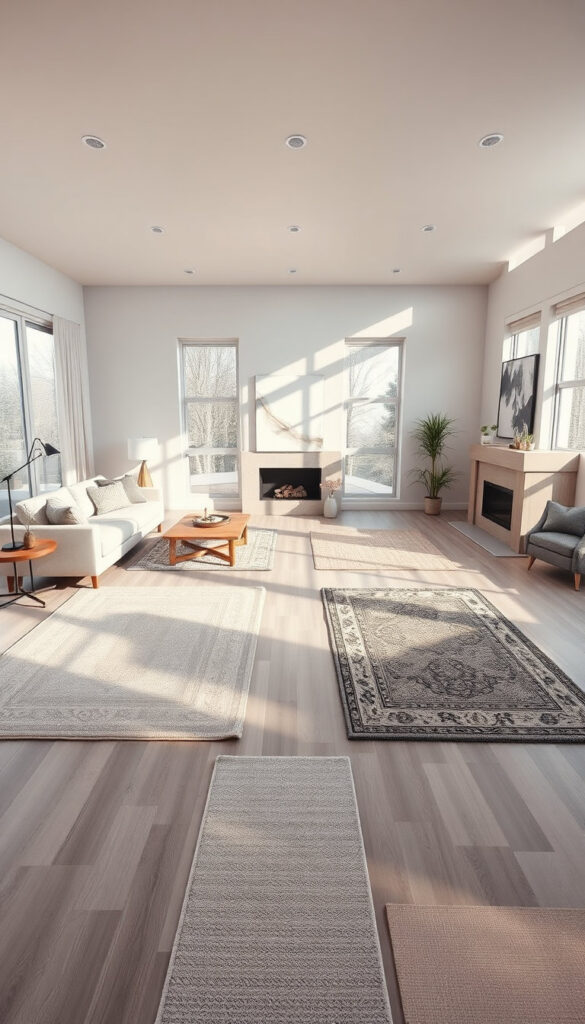
One of the most practical reasons for using five rugs is to separate different areas within a large living room.
For example:
- One rug under the main seating arrangement
- One rug beneath a reading chair
- One rug near a fireplace
- One rug under a game table
- One rug at the entry point of the room
This approach creates clear visual boundaries while maintaining a cohesive design throughout the space.
2. Layer Rugs for Added Texture
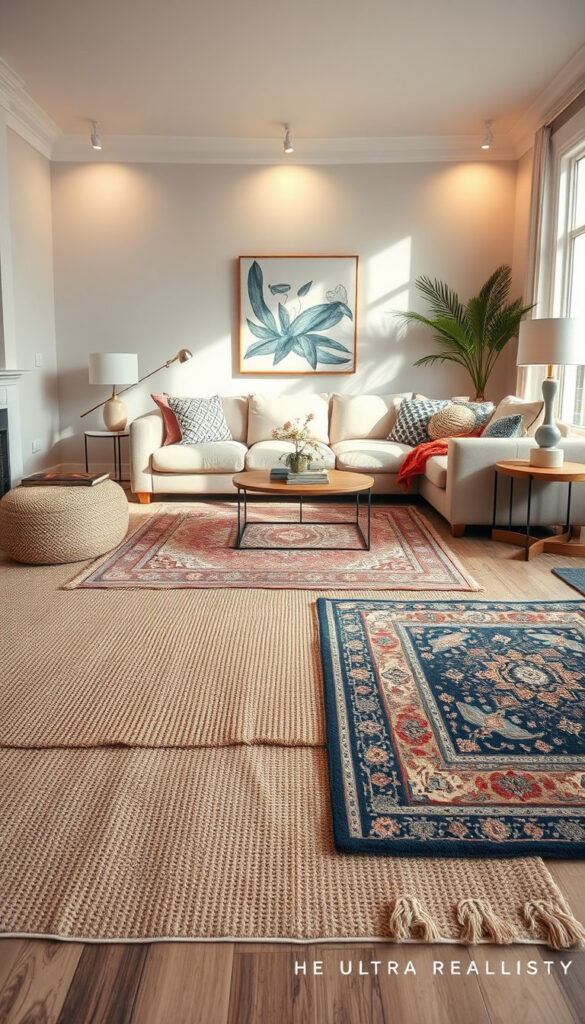
Layering rugs is a popular designer technique that instantly adds depth and luxury.
Start with a large neutral rug as your foundation. Then place smaller rugs on top in strategic locations.
Popular combinations include:
- Jute rug with a vintage Persian rug
- Wool rug with a faux cowhide rug
- Neutral flatweave rug with a colorful patterned accent rug
By layering several rugs, you can achieve a cozy and curated look without overwhelming the room.
3. Mix Different Shapes
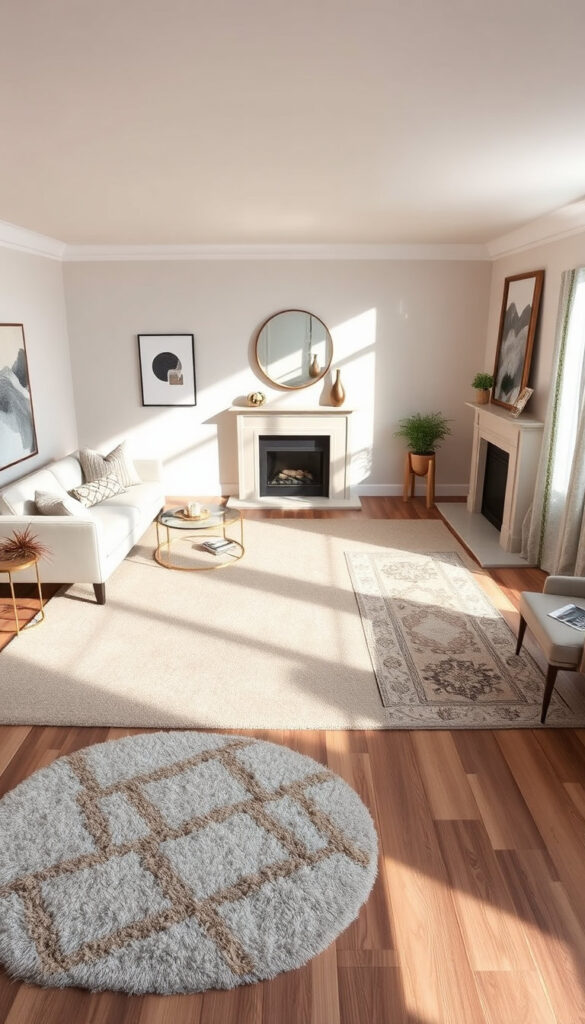
Using five rugs gives you an opportunity to experiment with shapes.
Consider combining:
- Rectangular rugs
- Round rugs
- Oval rugs
- Runner rugs
A round rug under a reading nook paired with rectangular rugs in seating areas creates visual variety and helps break up rigid furniture layouts.
Mixing shapes prevents the room from feeling repetitive while adding a designer touch.
4. Use a Consistent Color Palette
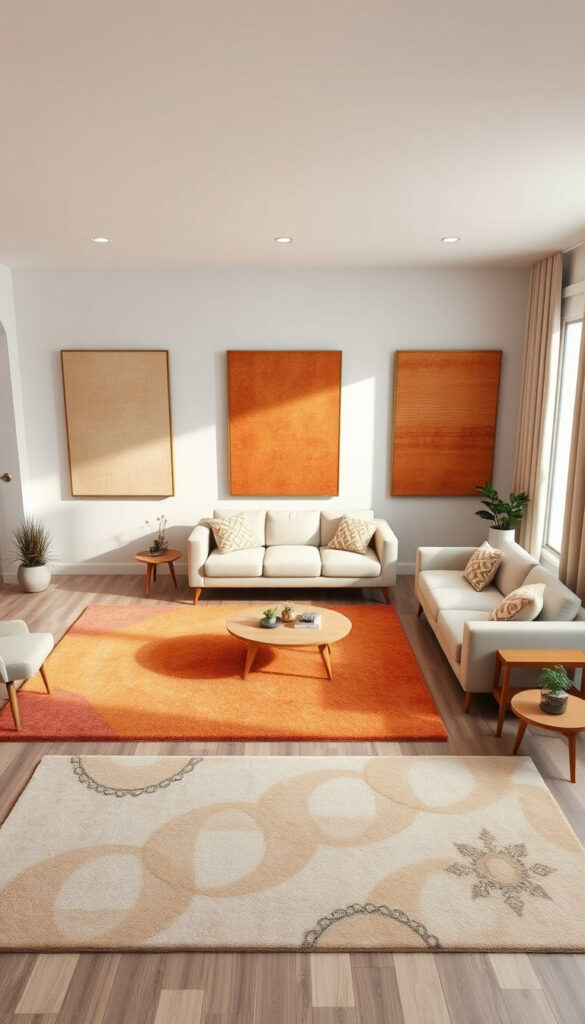
When decorating with multiple rugs, maintaining a consistent color scheme is essential.
Choose rugs that share similar:
- Accent colors
- Undertones
- Design styles
For example, if your living room features warm earth tones, select rugs with shades of:
- Beige
- Rust
- Terracotta
- Brown
- Cream
A coordinated color palette helps the five rugs feel connected rather than random.
5. Add a Rug Under the Coffee Table
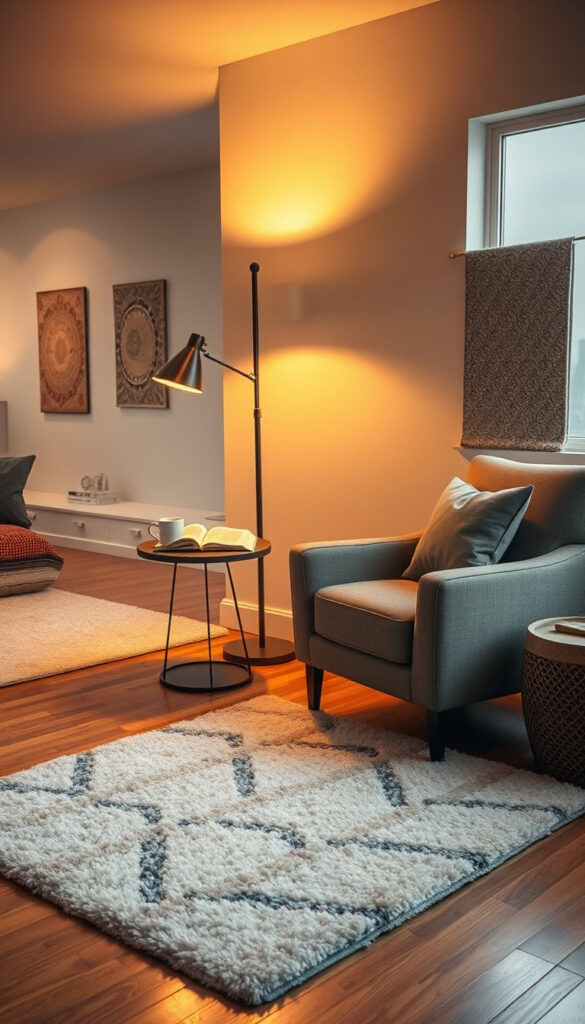
The main rug should typically anchor your central seating area.
Place a large rug beneath:
- Sofa
- Coffee table
- Accent chairs
Ideally, the front legs of major furniture pieces should sit on the rug to create a unified arrangement.
This rug serves as the visual centerpiece around which the other four rugs can complement the design.
6. Highlight a Reading Corner
A cozy reading nook deserves its own dedicated rug.
Use a small accent rug beneath:
- Reading chair
- Side table
- Floor lamp
This creates a separate retreat within the larger living room.
A plush rug can also make the space feel warmer and more inviting.
7. Define the Fireplace Area
If your living room includes a fireplace, placing a rug nearby helps draw attention to this focal point.
Choose a rug that complements the hearth materials and surrounding décor.
Popular options include:
- Vintage rugs
- Wool rugs
- Traditional patterned rugs
This simple addition helps create a comfortable gathering space around the fireplace.
8. Use Runner Rugs Along Walkways
Large living rooms often include pathways between furniture groupings.
Runner rugs work perfectly for these areas by:
- Protecting flooring
- Guiding traffic flow
- Adding visual continuity
A stylish runner can connect different zones while contributing to the overall layered look.
9. Introduce Different Textures
Texture plays an important role when working with multiple rugs.
Combining various materials keeps the room interesting and balanced.
Popular rug textures include:
- Wool
- Jute
- Sisal
- Cotton
- Faux fur
- Shag
Mixing textures prevents the design from feeling flat and creates a more dynamic atmosphere.
10. Balance Patterns Carefully
Patterns add personality, but too many competing designs can make a room feel chaotic.
A good rule is to combine:
- One bold patterned rug
- Two medium-scale patterns
- Two solid or subtle textured rugs
This balance creates harmony while still allowing each rug to stand out.
11. Use Rugs to Add Seasonal Style
One advantage of decorating with five rugs is flexibility.
You can easily swap smaller rugs throughout the year.
For example:
Spring and Summer
- Light colors
- Natural fibers
- Floral patterns
Fall and Winter
- Rich earth tones
- Plush textures
- Cozy layered designs
Seasonal rug changes refresh the room without requiring a complete redesign.
12. Choose Rugs of Different Sizes
Not every rug needs to be the same size.
A balanced arrangement might include:
- One large area rug
- Two medium-sized accent rugs
- Two smaller rugs or runners
Varying sizes creates a natural flow throughout the room while maintaining visual interest.
Common Mistakes to Avoid
When styling five rugs in a living room, avoid these common decorating errors.
Using Too Many Bold Patterns
Multiple highly patterned rugs can overwhelm the space.
Instead, mix statement rugs with simpler designs.
Ignoring Scale
Rugs that are too small may look disconnected from furniture.
Always choose sizes that fit each designated zone.
Clashing Colors
Different rugs should complement one another rather than compete for attention.
Stick to a coordinated color scheme.
Overcrowding the Room
Leave enough visible flooring between rugs when necessary to prevent a cluttered appearance.
Forgetting Functionality
Consider how people move through the room and place rugs where they enhance comfort and usability.
Best Rug Styles for a Layered Living Room
If you’re planning to use five rugs, these styles work especially well together:
Persian Rugs
Classic patterns that add elegance and timeless appeal.
Jute Rugs
Natural texture that pairs beautifully with almost any décor style.
Moroccan Rugs
Soft, cozy, and ideal for creating a relaxed atmosphere.
Shag Rugs
Excellent for adding comfort and warmth.
Flatweave Rugs
Versatile, lightweight, and easy to layer.
Vintage Rugs
Perfect for introducing character and unique charm.
Combining several of these styles creates a visually rich and inviting living room.
How to Make Multiple Rugs Look Cohesive
To ensure your living room feels professionally designed:
- Repeat colors throughout the rugs
- Coordinate textures with furniture
- Use complementary patterns
- Maintain consistent spacing
- Anchor major furniture pieces with larger rugs
- Keep the overall design theme consistent
These simple strategies help tie everything together while allowing each rug to contribute its own personality.
Final Thoughts
Using 5 rugs in living room spaces is a creative and effective way to add warmth, texture, and functionality. Rather than relying on a single rug, multiple rugs allow you to define zones, highlight focal points, and create a layered designer look that feels both stylish and comfortable.
Whether you prefer modern minimalism, rustic charm, bohemian flair, or traditional elegance, carefully chosen rugs can completely transform your living room. By balancing colors, textures, sizes, and patterns, you can create a welcoming space that feels thoughtfully designed and uniquely yours.