5 Mud Kitchen Ideas for Creative Outdoor Play
Mud kitchens are becoming one of the most loved outdoor play spaces for kids, and it’s easy to see why. They encourage creativity, sensory exploration, imaginative play, and hands-on learning — all while getting children outside in the fresh air. Whether you have a large backyard or a small garden corner, a mud kitchen can transform outdoor playtime into a magical experience.
From rustic wooden setups to colorful DIY stations, there are endless ways to create a fun and engaging mud kitchen. In this guide, we’ll explore five creative mud kitchen ideas that are easy to build, budget-friendly, and perfect for inspiring imaginative play.
Why Mud Kitchens Are Great for Kids
Before diving into the ideas, it’s worth understanding why mud kitchens are so popular among parents and educators.
Mud kitchens help children develop:
- Sensory and motor skills
- Creativity and imagination
- Social interaction
- Problem-solving abilities
- Confidence through independent play
Kids naturally love mixing, pouring, scooping, and pretending. A mud kitchen provides a safe space where they can experiment freely without worrying about making a mess indoors.
1. Rustic Wooden Mud Kitchen
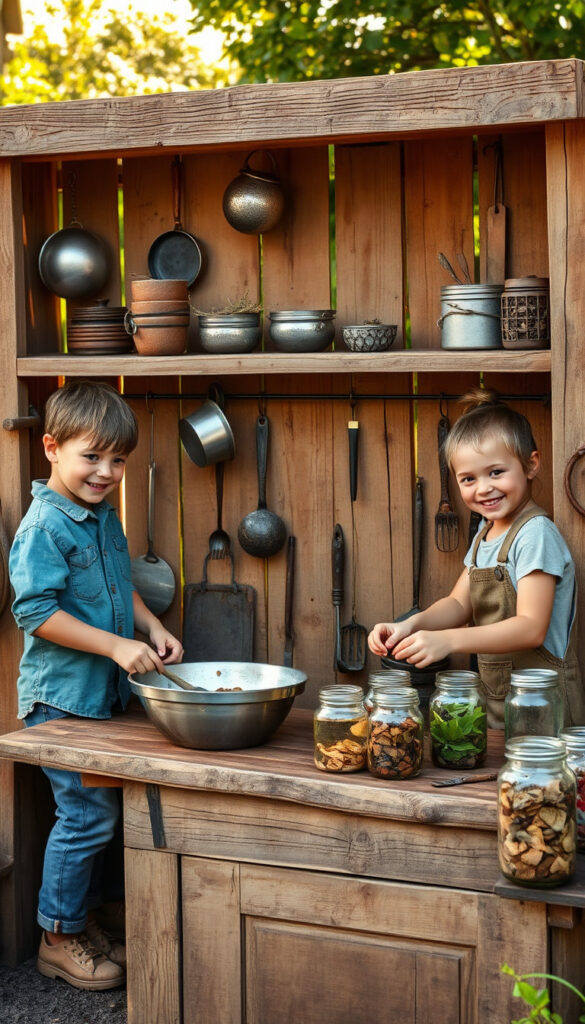
A rustic wooden mud kitchen is one of the most timeless and charming options for outdoor play areas. Using reclaimed wood or old pallets gives the kitchen a natural look that blends beautifully into any backyard.
Features to Include
- Wooden shelves for pots and pans
- Hooks for hanging utensils
- A small sink or washing bowl
- Chalkboard menu area
- Storage baskets for mud pies and leaves
You can customize the design based on the available space. Adding old kitchen accessories like metal bowls, muffin trays, and spoons makes the setup feel realistic and exciting for children.
Why Kids Love It
The rustic style creates a real-life cooking atmosphere where children can pretend to run their own outdoor café or bakery. It encourages hours of imaginative role play.
Budget Tip
Use leftover timber, second-hand furniture, or old cabinets to reduce costs. A simple pallet structure can become a beautiful mud kitchen with just a little sanding and paint.
2. Colorful DIY Mud Kitchen
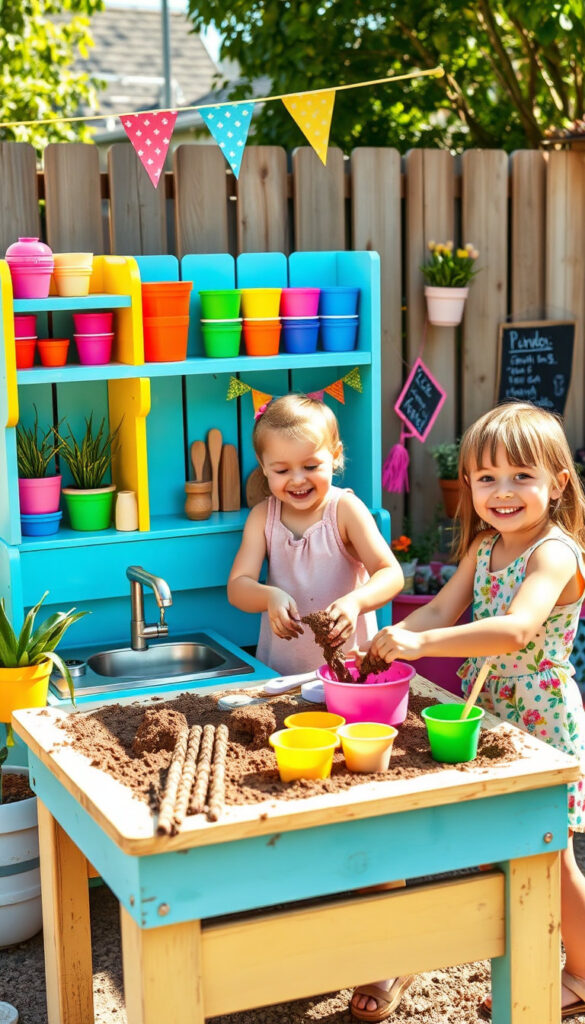
If you want something bright and cheerful, a colorful DIY mud kitchen is the perfect choice. This style works especially well for younger children who enjoy playful designs and vibrant colors.
How to Create It
Paint wooden panels in fun shades like turquoise, yellow, green, or pink. Add colorful containers, plastic cups, and painted flower pots for decoration.
You can also include:
- Bright bunting flags
- Rainbow-painted shelves
- Colorful measuring cups
- Decorative signs
Best Materials
- Old play tables
- Plastic storage bins
- Weather-resistant paint
- Recycled kitchen accessories
Benefits of a Colorful Setup
Bright colors create an inviting play area that feels energetic and fun. It can also help encourage children who may be shy about messy play.
Safety Tip
Always use non-toxic outdoor paint and smooth any rough edges before letting children play.
3. Farmhouse-Style Mud Kitchen
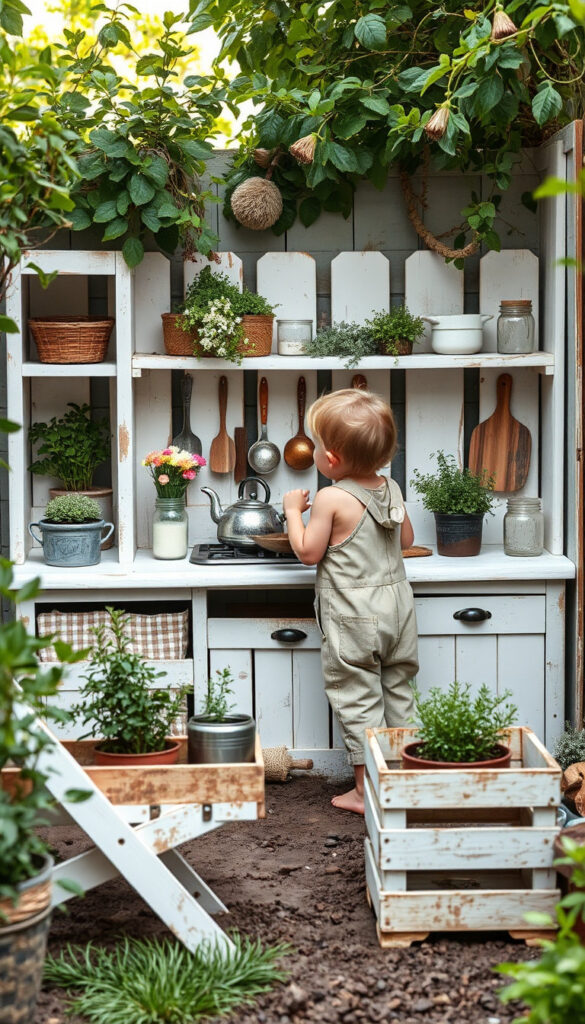
A farmhouse-style mud kitchen combines simplicity with functionality. This idea focuses on creating a cozy outdoor cooking space inspired by traditional country kitchens.
Design Elements
- Whitewashed wood
- Mason jars for storage
- Vintage cooking tools
- Small herb planters
- Wooden crates for organization
You can even add mini gardening tools so kids can collect herbs, flowers, and leaves to use in their pretend recipes.
Educational Benefits
This style encourages nature-based learning. Children can explore textures, smells, and colors while learning about plants and outdoor environments.
Perfect for Small Spaces
Farmhouse mud kitchens don’t require a huge backyard. A compact corner with a small table and a few accessories can still provide endless entertainment.
4. Mud Kitchen with Water Play Station
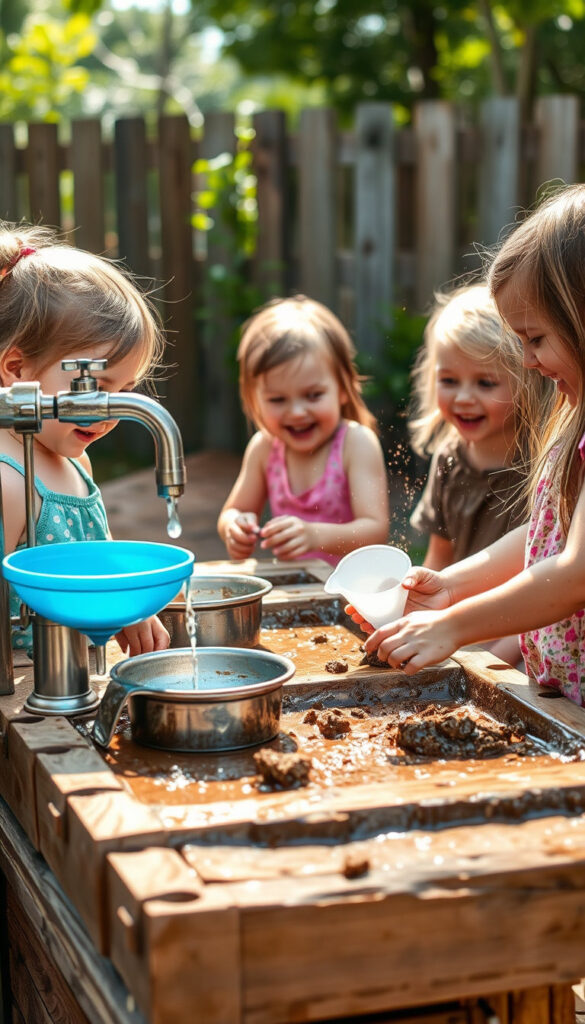
Adding a water station instantly upgrades a basic mud kitchen into an interactive sensory experience. Kids love combining water with mud to create soups, cakes, potions, and pretend meals.
Must-Have Features
- Water dispenser or bucket tap
- Mixing bowls
- Funnels and measuring jugs
- Drainage tray
- Mud mixing area
A simple container with a tap can provide enough running water for hours of entertainment.
Why This Idea Is So Popular
Water play adds another sensory element that keeps children engaged longer. It also improves hand-eye coordination and fine motor skills.
Easy DIY Option
Attach a large water container above the play area and place a bucket underneath to catch excess water. This creates a simple, reusable system without needing plumbing.
Cleaning Tip
Use gravel or mulch under the mud kitchen area to help with drainage and reduce slippery surfaces.
5. Nature-Inspired Mud Kitchen
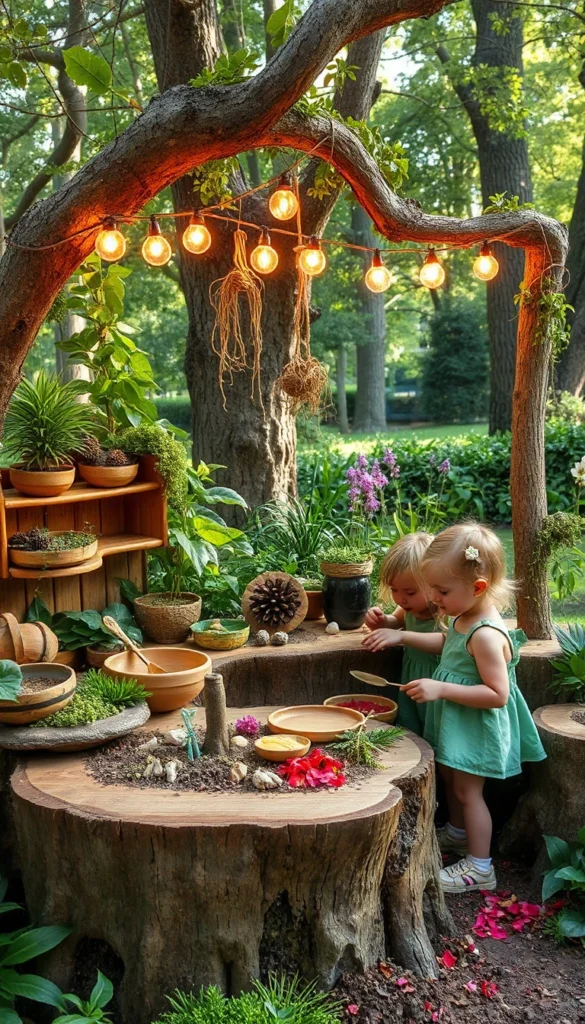
A nature-inspired mud kitchen focuses on using natural materials and outdoor elements to create an earthy, eco-friendly play space.
Natural Materials to Use
- Tree stumps as tables
- Stones for decoration
- Bamboo shelves
- Pinecones and leaves
- Wooden spoons and bowls
Children can gather flowers, grass, sticks, and leaves from the garden to create imaginative dishes and potions.
Creating a Magical Feel
Add fairy lights, mini signs, or hanging plants to create a whimsical atmosphere. This style works beautifully in gardens with lots of greenery.
Why Parents Love It
Nature-inspired kitchens encourage outdoor exploration and reduce screen time. They also help children develop a stronger connection with nature.
Essential Accessories for Any Mud Kitchen
No matter which mud kitchen style you choose, a few accessories can make the play experience even more exciting.
Popular Mud Kitchen Accessories
- Pots and pans
- Measuring cups
- Wooden spoons
- Muffin trays
- Watering cans
- Colanders
- Mixing bowls
- Aprons
Most of these items can be found at thrift stores or reused from old kitchen supplies.
Tips for Building the Perfect Mud Kitchen
Creating a mud kitchen doesn’t have to be complicated or expensive. Here are some practical tips to make the process easier.
Choose the Right Location
Pick a shaded outdoor area that’s easy to clean and safe for children to access.
Use Durable Materials
Outdoor furniture, treated wood, and weather-resistant accessories will last longer through changing seasons.
Encourage Open-Ended Play
Avoid overly structured setups. The best mud kitchens allow children to invent their own games and recipes.
Keep Safety in Mind
Regularly check for splinters, rust, or broken tools. Make sure all accessories are child-safe.
How Mud Kitchens Support Child Development
Mud kitchens are more than just a fun outdoor trend. They play a major role in early childhood development.
Sensory Learning
Children explore textures, temperatures, and materials through hands-on play.
Social Skills
Playing together encourages teamwork, sharing, and communication.
Creativity
Mud kitchens inspire storytelling, pretend cooking, and imaginative adventures.
Physical Development
Scooping, pouring, lifting, and mixing help improve coordination and motor skills.
Final Thoughts
Mud kitchens are a fantastic way to encourage outdoor play, creativity, and hands-on learning. Whether you prefer a rustic wooden design, a colorful DIY setup, or a nature-inspired play space, there’s a mud kitchen idea to suit every family and backyard.
The best part is that you don’t need a huge budget or professional woodworking skills to create one. With a little imagination and a few recycled materials, you can build a magical outdoor play area your kids will love for years.