5 How to Build a Mud Kitchen: Creative DIY Ideas for Endless Outdoor Fun
A mud kitchen is one of the best additions you can make to your backyard if you want to encourage imaginative play, creativity, and outdoor exploration. Children love mixing mud, water, leaves, flowers, and natural materials to create their own pretend meals and magical potions. The beauty of a mud kitchen is that it can be as simple or elaborate as you like, using affordable materials that are often already available around your home.
If you’re looking for inspiration, these five creative ways to build a mud kitchen will help you design a fun and engaging outdoor play area that your children will enjoy for years to come.
1. Build a Simple Mud Kitchen Using Wooden Pallets
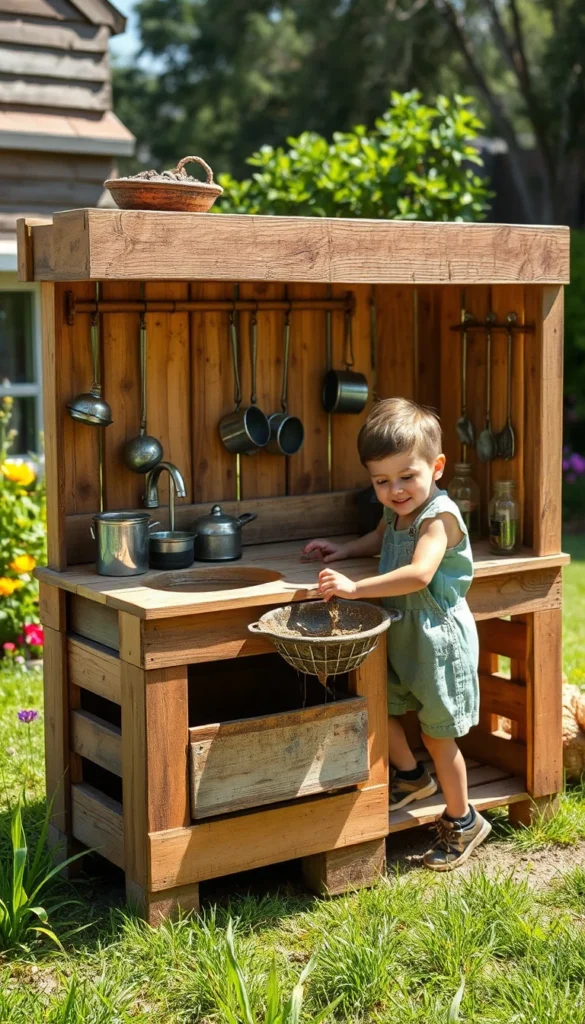
Wooden pallets are one of the most popular materials for DIY mud kitchens because they are affordable, durable, and easy to work with. Many local businesses and warehouses offer used pallets for free, making this a budget-friendly project.
Start by selecting clean, sturdy pallets and sanding down any rough edges. Position one pallet vertically as the back panel and another horizontally to create a countertop. Secure the pieces together using screws for stability.
To make the kitchen more functional, add hooks for hanging utensils, small shelves for storing play items, and a bowl that can serve as a sink. Children can use old pots, pans, and spoons to create imaginative mud recipes.
This type of mud kitchen is perfect for beginners because it requires minimal materials and can be completed in a single weekend.
2. Transform an Old Cabinet into a Mud Kitchen
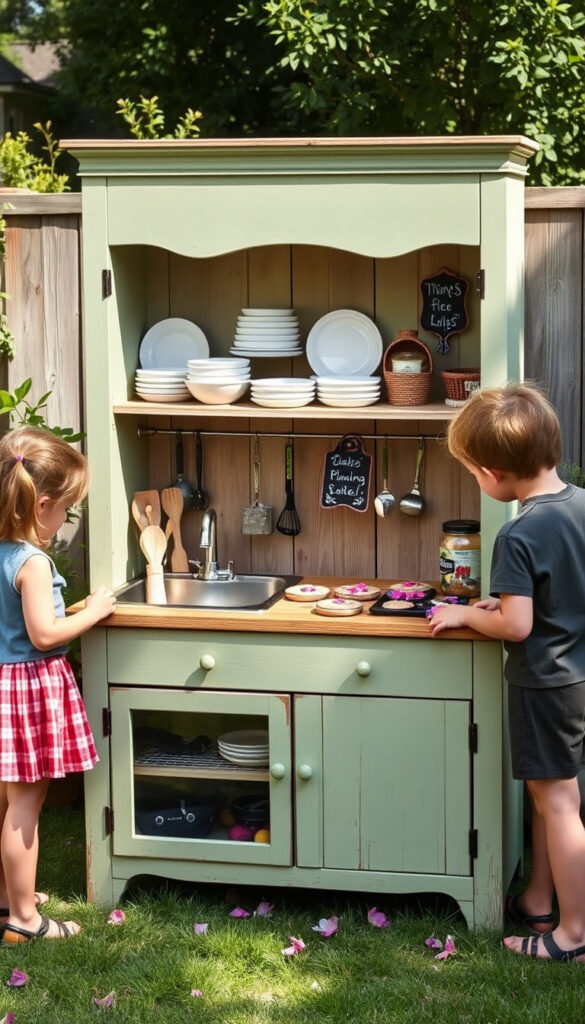
An old cabinet or dresser can be transformed into a charming mud kitchen with very little effort. Instead of throwing away unused furniture, repurpose it into a creative outdoor play station.
Begin by cleaning the cabinet thoroughly and removing any damaged parts. If the cabinet has drawers, you can keep some for storage and remove others to create open shelving.
Cut a circular opening in the top surface to fit a metal or plastic bowl that will act as a sink. Add decorative knobs, hooks, and painted details to give the kitchen a realistic appearance.
Weather-resistant paint can help protect the furniture from outdoor conditions while adding a colorful touch. Bright shades like turquoise, yellow, or green often appeal to children and make the kitchen stand out in the garden.
Repurposed furniture mud kitchens are not only eco-friendly but also provide plenty of storage space for outdoor toys and accessories.
3. Create a Rustic Mud Kitchen with Natural Materials
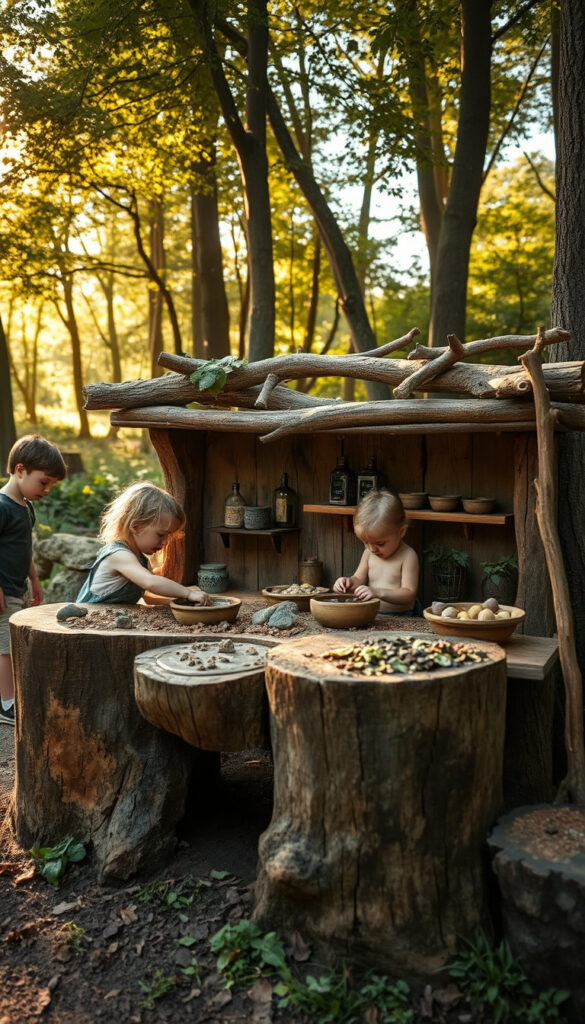
For families who love natural landscapes, a rustic mud kitchen built from logs, tree stumps, and reclaimed wood can blend beautifully into the garden environment.
Start by arranging large logs or sturdy tree stumps to form the base. Place wooden planks across the supports to create countertops and work surfaces. Natural materials provide a unique look that complements outdoor spaces.
You can enhance the rustic design by incorporating:
- Tree stump seating
- Branches as utensil racks
- Wooden crates for storage
- Decorative stones
- Natural planters
This type of mud kitchen encourages children to connect with nature while developing creativity and problem-solving skills. The organic appearance makes it feel like a natural extension of the garden rather than a manufactured play structure.
Because many materials can be sourced directly from your yard, this option is often very affordable.
4. Design a Compact Mud Kitchen for Small Spaces
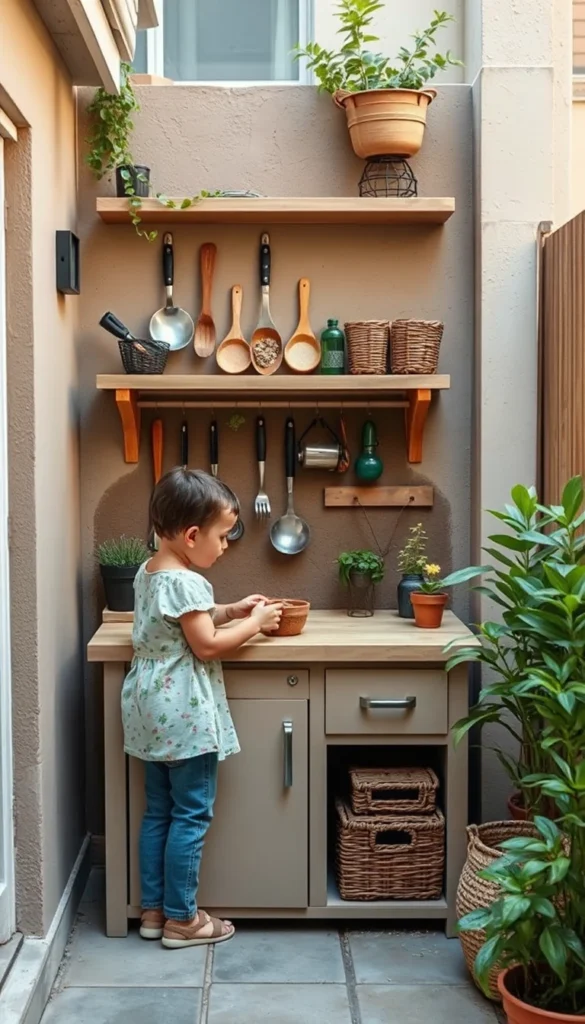
Not every family has a large backyard, but even a small patio or garden corner can accommodate a mud kitchen. Compact designs focus on maximizing functionality while minimizing space requirements.
A small mud kitchen can include a narrow countertop, a small sink basin, and wall-mounted storage solutions. Vertical designs work particularly well because they use height rather than floor space.
Consider adding:
- Hanging utensil hooks
- Small storage baskets
- Foldable work surfaces
- Compact shelves
- Portable water containers
Keeping the design lightweight allows it to be moved when necessary. This flexibility is especially useful for families with limited outdoor areas.
Even a modest mud kitchen can provide hours of imaginative play and sensory exploration for children.
5. Build a Deluxe Mud Kitchen with Multiple Activity Stations
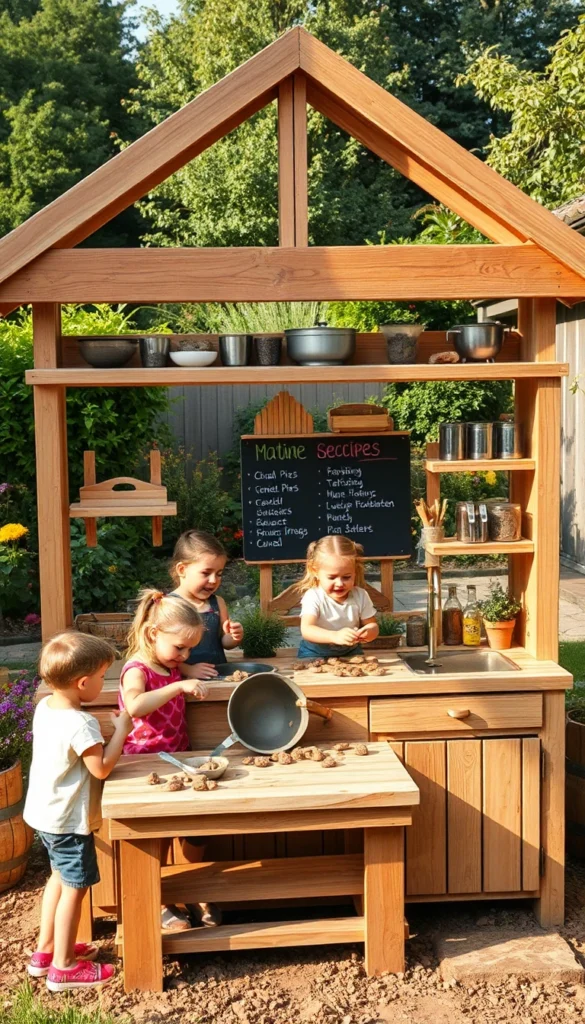
If you want to create the ultimate outdoor play area, consider building a deluxe mud kitchen with several activity zones. This larger setup is ideal for families with multiple children or for daycare environments.
A deluxe mud kitchen may include:
- Main cooking station
- Mud mixing area
- Sink and washing station
- Baking corner
- Storage shelves
- Chalkboard menu board
Multiple workspaces allow children to play together while developing teamwork and communication skills. Accessories such as measuring cups, muffin trays, watering cans, and gardening tools can make the experience even more realistic.
Using pressure-treated wood and weather-resistant finishes will help ensure the structure remains durable throughout the seasons.
While this design requires more planning and materials, it creates an impressive outdoor play space that children will love.
Essential Materials for Building a Mud Kitchen
Before starting your project, gather the necessary materials. Depending on your chosen design, you may need:
- Wooden pallets or reclaimed lumber
- Old cabinets or furniture
- Screws and nails
- Sandpaper
- Outdoor paint
- Metal or plastic bowls
- Hooks and storage baskets
- Weatherproof sealant
- Child-safe tools
Using recycled and repurposed materials can significantly reduce construction costs while supporting environmentally friendly practices.
Safety Tips for Your DIY Mud Kitchen
Safety should always be a priority when building outdoor play equipment for children.
Follow these guidelines:
- Sand all wooden surfaces thoroughly.
- Remove exposed nails and sharp edges.
- Use non-toxic paints and finishes.
- Ensure the structure is stable and secure.
- Inspect the kitchen regularly for wear and damage.
- Supervise younger children during play.
Taking these precautions helps create a safe and enjoyable environment for outdoor activities.
Benefits of a Mud Kitchen for Child Development
Mud kitchens provide more than simple entertainment. They offer valuable learning opportunities that support healthy child development.
Encourages Creativity
Children invent recipes, role-play as chefs, and create imaginative scenarios during play.
Supports Sensory Exploration
Mixing mud, water, flowers, and natural materials stimulates multiple senses and promotes learning through hands-on experiences.
Improves Social Skills
When children play together, they learn communication, cooperation, and sharing.
Develops Problem-Solving Abilities
Experimenting with different materials teaches children how to observe, test, and discover solutions.
Promotes Outdoor Play
Mud kitchens encourage children to spend more time outside, enjoying fresh air and nature.
Conclusion
Building a mud kitchen is a rewarding DIY project that creates endless opportunities for imaginative outdoor play. Whether you choose a simple pallet design, repurpose an old cabinet, build with natural materials, create a compact setup, or construct a deluxe play station, the result will be a fun and educational space for children.