9 Water Table Ideas: Fun & Creative Ways to Keep Kids Engaged
Water tables are a classic favorite for children. They provide endless opportunities for sensory play, motor skill development, and imaginative fun. Whether you’re looking to enhance backyard play, indoor sensory activities, or educational water-based experiments, these 9 water table ideas will spark creativity and keep kids entertained for hours.
1. DIY Backyard Water Table
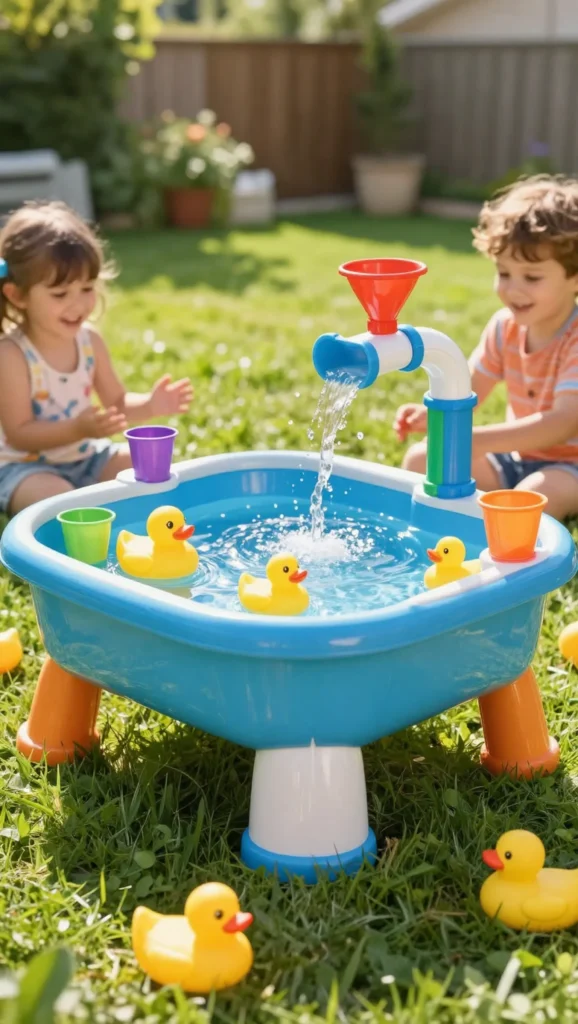
Transform a simple container into a fun water table. Using materials like a shallow plastic tub, PVC pipes, or old storage bins, you can create a water play station customized for your child’s height and interests. Add floating toys, cups, and funnels to encourage pouring and water exploration.
Tips:
- Ensure the table is stable on flat ground.
- Include water toys like rubber ducks, boats, and cups of various sizes.
- Add a few drops of food coloring to make the water visually stimulating.
This idea is perfect for hot summer days and provides kids with a safe, fun space to splash and play.
2. Sensory Water Table with Sand and Pebbles
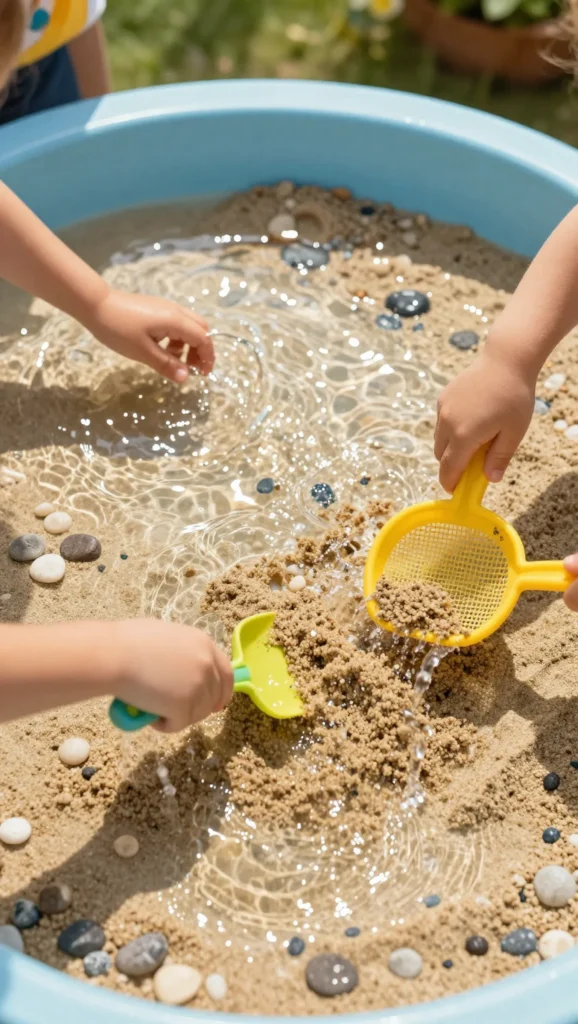
Take your water table to the next level by adding sand and pebbles. Children can dig, scoop, and pour water over the sand to watch it flow. This creates a mini beach experience and introduces concepts like texture, weight, and volume.
Tips:
- Use a divided water table to separate sand and water.
- Include small shovels, sieves, and scoops.
- Consider adding shells or small natural objects for extra sensory exploration.
This combination of sand and water promotes imaginative play and early science skills.
3. Floating Garden Water Table
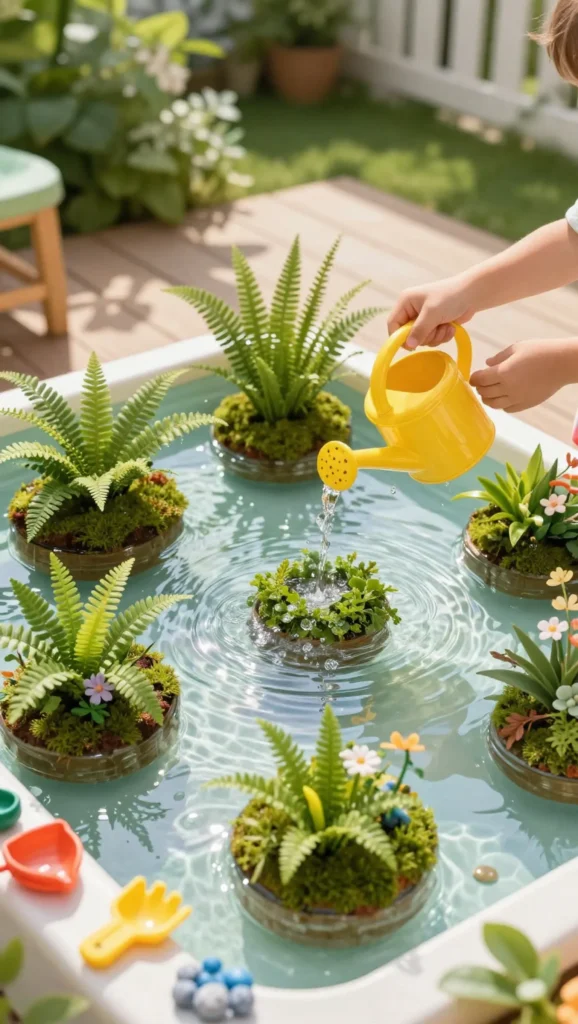
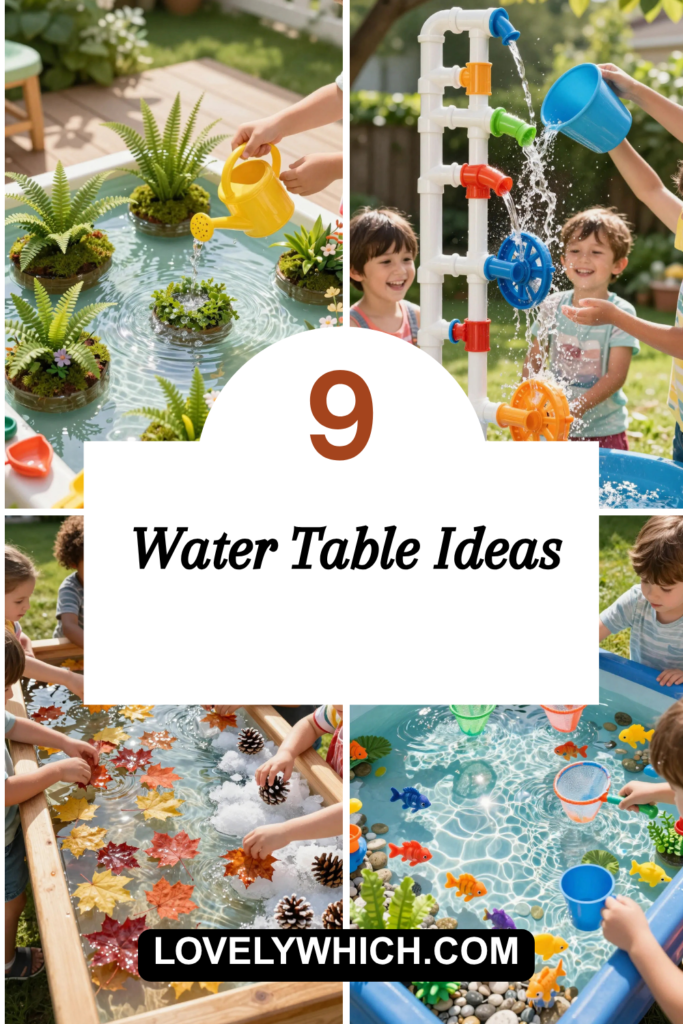
Introduce gardening and water play in one fun activity. Place floating plants, plastic flowers, or even water-safe seeds on the surface of the water. Kids can “water” the plants, observe floating and sinking, and learn about how plants grow.
Tips:
- Use lightweight, floating objects like lily pads or corks.
- Show children how water moves to nourish plants.
- Add small watering cans or droppers for interactive fun.
A floating garden water table is perfect for children who love nature and learning about plants.
4. DIY Water Wall Table
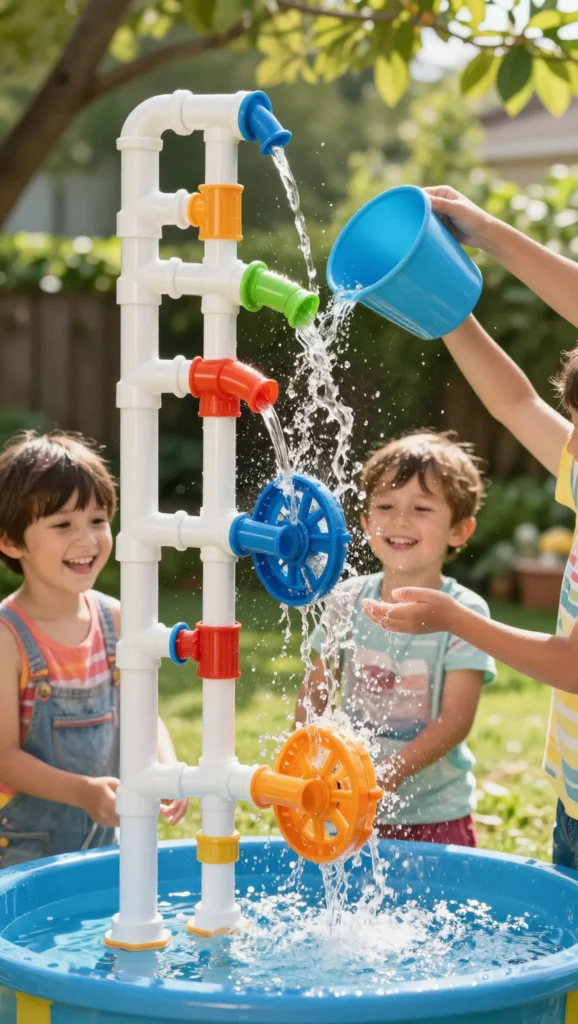
A water wall is a vertical play station connected to a water table. Using PVC pipes, funnels, and small containers, children can pour water from the top and watch it flow through various channels. This teaches cause and effect while developing hand-eye coordination.
Tips:
- Make sure the water wall is securely attached to a wall or fence.
- Experiment with different pipe shapes and funnel sizes.
- Encourage kids to predict where the water will go.
Water walls combine science, creativity, and fine motor skills, making them an excellent addition to any water table setup.
5. Color Mixing Water Table
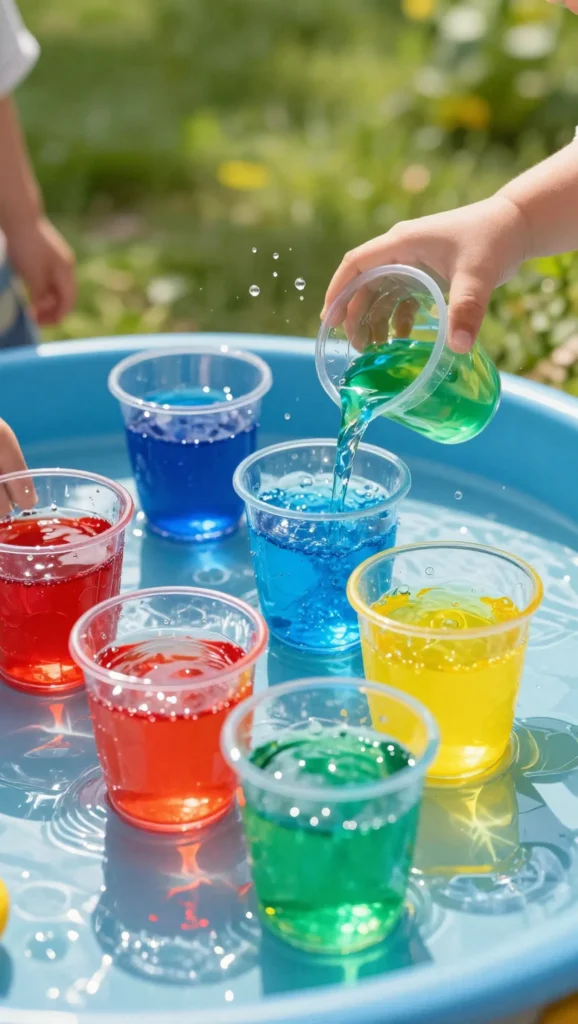
Turn your water table into a colorful science experiment. Fill separate containers with primary-colored water (red, blue, yellow) and let children mix colors to create new shades. This activity is both visually stimulating and educational.
Tips:
- Use food coloring or liquid watercolors for safe experimentation.
- Provide droppers, spoons, and small cups for mixing.
- Ask kids to guess the resulting color before mixing.
This water table idea teaches color theory and sparks creativity while keeping kids engaged.
6. Ice and Floating Objects Water Table
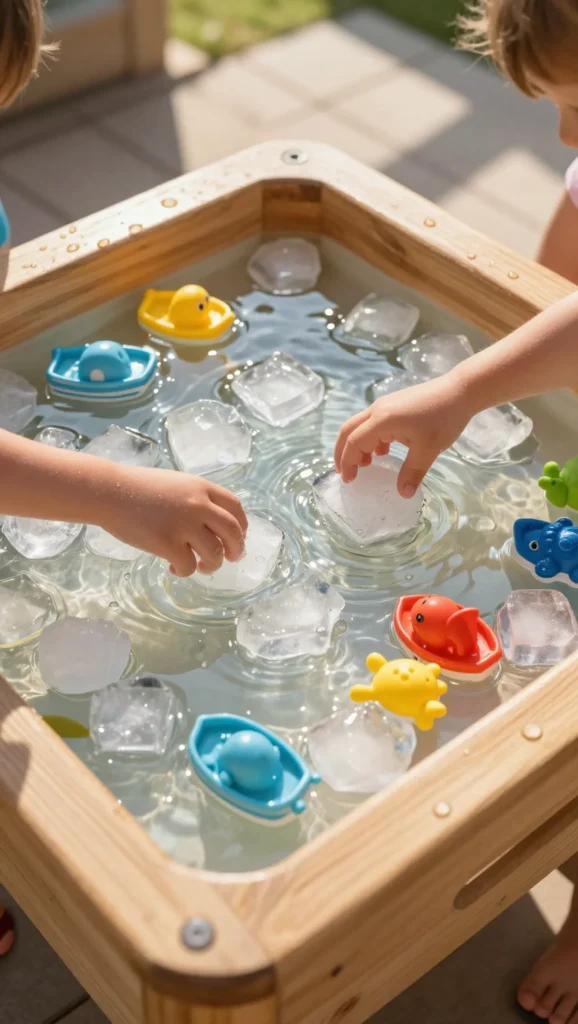
Introduce the concept of melting and floating by adding ice cubes to your water table. Children can experiment with ice, boats, and floating toys, learning how temperature affects materials. This is perfect for warm days or a hands-on winter activity indoors.
Tips:
- Freeze small toys inside ice cubes for a fun discovery activity.
- Add salt or warm water to speed up melting and discuss why it happens.
- Include floating and sinking objects for experiments.
Ice and floating water tables make science playful and interactive, enhancing problem-solving skills.
7. Aquarium-Themed Water Table
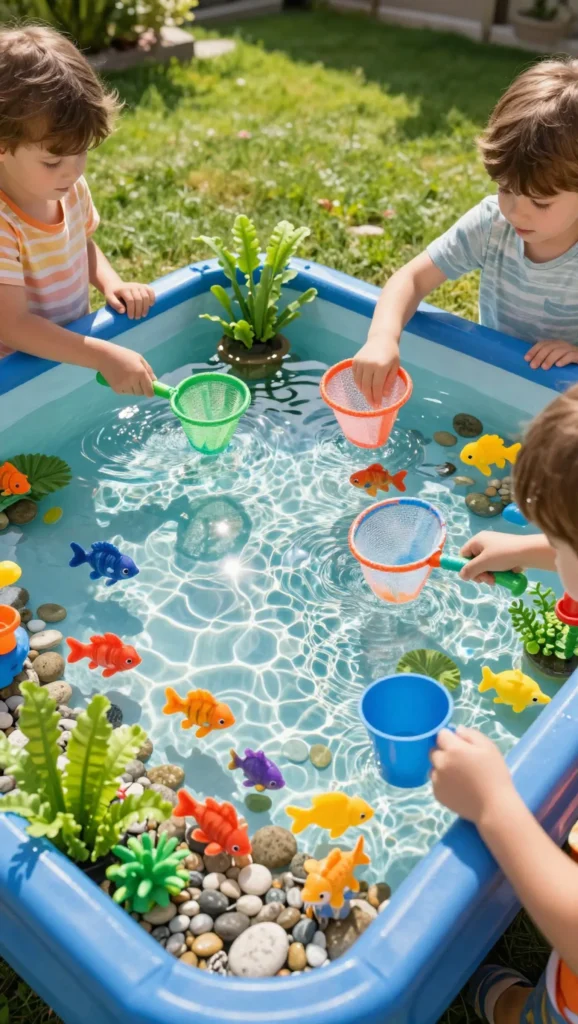
Bring the ocean or freshwater world into your backyard. Fill the water table with plastic fish, sea creatures, and plants. Kids can use nets, cups, and droppers to explore, feed, and “catch” fish, turning the water table into a mini aquarium.
Tips:
- Use waterproof toys for durability.
- Add small pebbles or sand to simulate the sea floor.
- Discuss fish habitats, movement, and aquatic life with children.
An aquarium-themed water table encourages imaginative play and introduces early marine biology concepts.
8. Floating Boat Race Water Table
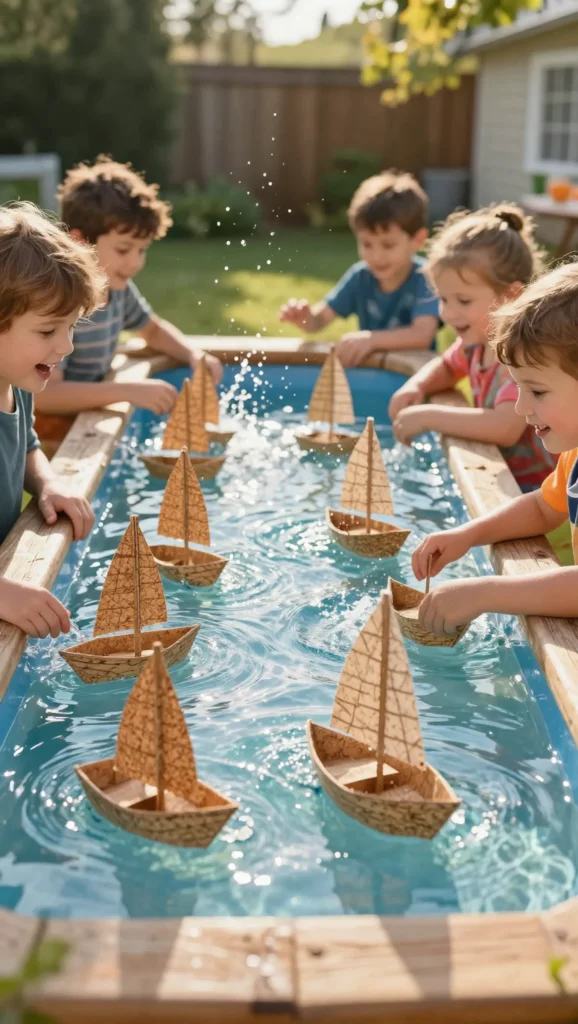
Combine water play with friendly competition. Create a mini racing course using gutters, channels, or trays. Children can design small boats from corks, paper, or recycled materials and race them down the track. This is an exciting way to encourage teamwork and engineering skills.
Tips:
- Use lightweight boats that float easily.
- Experiment with water currents and boat designs.
- Make it a timed race to teach measurement and fairness.
Floating boat races offer a fun way to combine STEM learning and outdoor play.
9. Seasonal Water Table Fun
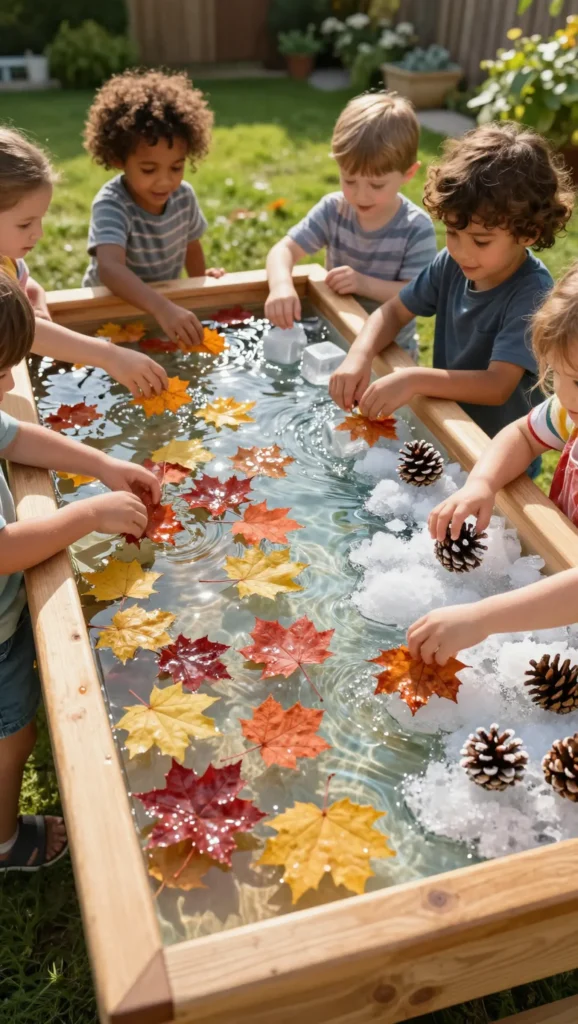
Keep water table activities exciting by rotating seasonal themes. In winter, try adding ice sculptures and snow cubes. In autumn, add floating leaves and natural objects. Seasonal water tables keep children engaged year-round and stimulate curiosity about the environment.
Tips:
- Change the table decorations and toys according to the season.
- Incorporate sensory elements like scents, textures, or sounds.
- Ask children to make observations about seasonal changes in water behavior.
This idea ensures that the water table remains fresh and captivating, providing endless learning opportunities.
Tips for Choosing the Best Water Table
When selecting or building a water table, consider:
- Age-appropriate design: Make sure the table is the right height and safe for your child.
- Durability: Choose materials that can withstand water exposure and outdoor conditions.
- Accessibility: Include tools, toys, and activities that encourage independent play.
- Educational Value: Incorporate sensory, STEM, and creative elements.
A well-designed water table is more than just a toy—it’s a hands-on learning center.
Benefits of Water Table Play
Water tables are more than fun—they’re educational. Benefits include:
- Sensory Development: Water play stimulates tactile and visual senses.
- Fine Motor Skills: Pouring, scooping, and using droppers build hand-eye coordination.
- Cognitive Skills: Experimenting with floating, sinking, and color mixing teaches problem-solving.
- Social Interaction: Sharing a water table encourages teamwork and cooperative play.
- Creativity: Imaginative play lets children invent stories, races, and experiments.
Whether it’s a DIY project or a pre-made table, the right water table encourages curiosity and interactive learning.
Conclusion
Water tables are versatile, educational, and endlessly entertaining. From DIY backyard setups to themed sensory experiences, the 9 water table ideas above offer inspiration for creating hours of engaging play. Incorporating sand, ice, colors, boats, and seasonal items transforms a simple water table into a hands-on learning adventure.